Showing posts with label loofah/luffa. Show all posts

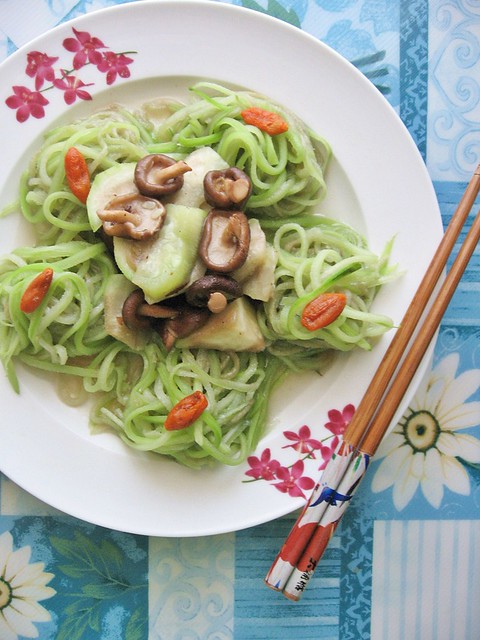
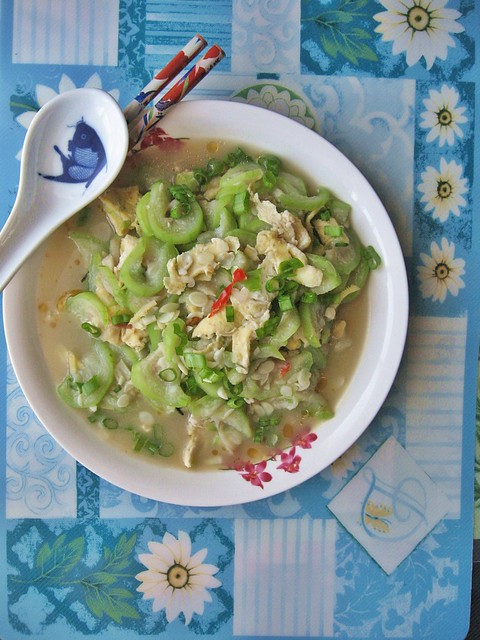
Luffa (Chinese Okra/ Singua) with Fresh Mushrooms 香菇炒丝瓜丝

These baby shiitake mushrooms are lighter-tasting (less earthy flavors) compared to their larger-size shiitake counterparts. They did not overpower the natural subtle sweet flavor of luffa (also known as Singua or Chinese Okra) when cooked. The other good mushroom alternative that may pair well with luffa, are beech mushrooms, that in my opinion, are also lighter in their earthy flavors when cooked.


On the day I cooked this dish, the other one was asking the reason why I like to cook luffa. Well, I have cooked many other vegetables many times but never asked this question. So I thought: he was complaining about the dish; he did not like luffa. However, I became clear-headed as I sort out my thoughts and reasons.

I do not have a special inclination towards luffa though I must admit I have cooked luffa in several different ways - steamed, in stir-fries, soups, salads. Yes it is a nutritious and healthy ingredient to cook with but so are the other vegetables and squash. I use luffa more often in summer because these are the few months that luffa is at their prime, or more accurately - very fresh and tender. Other times, luffa tend to be fibrous, so I don't even buy them. Luffa is not easily found in the grocery stores.

This Asian squash is usually only available in the Chinese grocery stores/supermarkets and in the context of this round-type of luffa, only available in the summer's farmer market. That is why I make use of their limited availability, and cook it as often as I can.
Luffa (Loofah) Salad 麻油拌丝瓜

In-season Luffa (loofah) (which happens to be now!) is fresh, young and tender. Quite typically, I like to make a quick "stew-like" stir-fry in my kitchen, with eggs e.g. Luffa with Eggs; or tomatoes e.g. Luffa with Tomatoes. Occasionally I also cook them with clams - a popular Taiwanese-style dish.

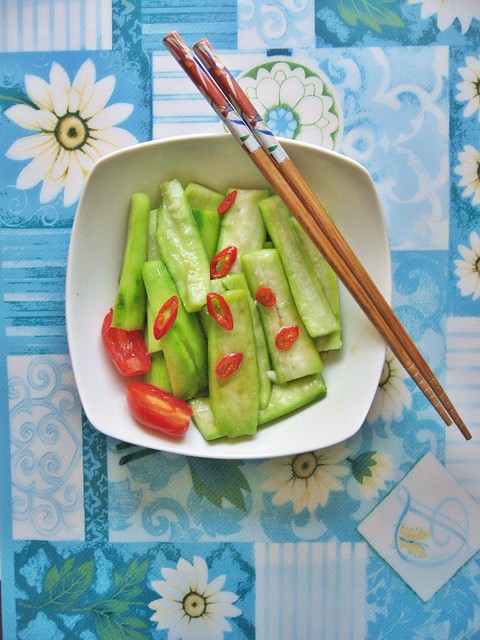
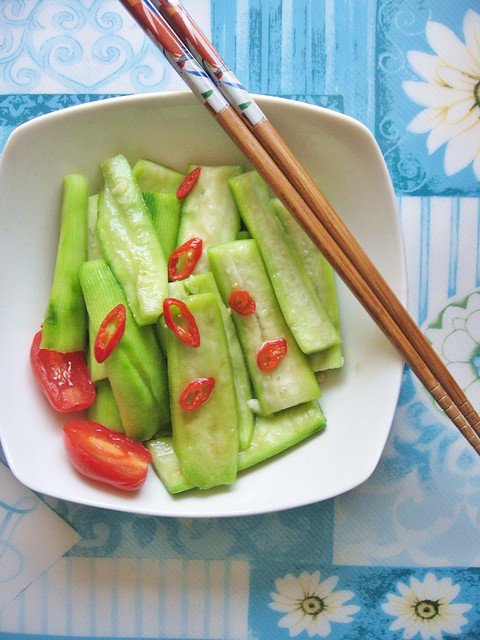
However, when I watched on television, how a Chinese chef preparing it so quickly, blanching 10 seconds then served in a carrot puree/sauce, I was motivated to try this quick-cooking method.


The chef highlighted that this way of cooking luffa will render the luffa still crisp with a tender bite, compared to the soft spongy texture of luffa when stir-fried and simmered like a quick stew.

For today, I will omit the sauce on this quick-cooked luffa. It means one-less step, less hassle and less cooking time. And surprise surprise surprise, I really enjoyed this other dimension of luffa - fresh and tender with a firm bite.


Luffa (Loofah) with Egg 丝瓜炒蛋

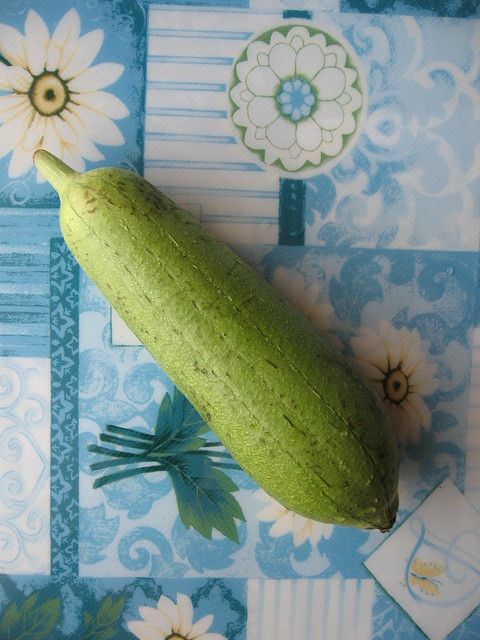
Now, I thought there was only one kind of luffa (known as Angled Luffa) and I was wrong. Just the other day this summer, I chanced upon a gourd-like vegetable next to the angled luffa in the farmer's market and in the midst of market-goers, found that this smooth-skinned gourd-like vegetable is also luffa.


What? Luffa? Well, the luffa I know does not look like that. So yes, this is luffa indeed but another variety - Smooth-Skinned Luffa, or according to the stall, the younger version of Angled Luffa.


Luffa (or Loofah) with Egg is a healthy, nutritious and delicious dish, favored by homecooks in many Asian families, as this is also a quick and easy recipe.

I certainly enjoy this smoother-skin luffa, much better than Angled Luffa. Why? Peeling is much easier for this smooth-skinned luffa compared to the angled/ridged luffa. With easier peeling, the "yield" for this smooth-skinned luffa is also higher as I get as much "flesh" as possible in this luffa.  I also found that this luffa is more fleshy and moist when cooked - can I even use the word "juicy"?

I did not even use much water while cooking but by the time the entire dish was cooked, there was a reasonable amount of liquid due to the inherent moisture in the smooth-skinned luffa itself.


Loofah in Rich Tomato Broth 丝瓜番茄汤

Never be stingy on tomatoes.

It makes more sense to use them generously especially when they are in season. Look at that rich almost-creamy lycopene-rich tomato broth that was made from three medium-sized tomatoes - it makes a simple vegetarian broth so good!

So it depends on what you want - Vitamin C or lycopene from tomatoes? For the latter, you really have to cook your tomatoes to release the lycopene.


Luffa Tomatoes Seaweed Soup - 丝瓜番茄紫菜汤

Throughout summer, I have cooked this soup so many times because of the abundance of fresh Singua (luffa) in my nearby farmer's market. I tried steaming Singua once but the other half at home did not fancy the dish. Why, I ask ? The dish has fresh natural flavors of Singua. Why? I did not get an answer. But when I cook Singua soup, there is never leftovers.

The culprit is not the ingredient (Chinese okra/luffa/singua, in this case). It must be the cooking method that yields a different outcome that appeals to different people. That's the same reasoning for making at least 12 attempts (disguise, hide, cheat, persuade, etc.) to encourage kids to eat the food/ingredient (e.g. bell peppers) they don't like.

Is there any ingredient you dislike but that you gradually embrace because of how it is cooked?


Without the use of chicken stock, this Singua (Luffa/Chinese Okra) Soup with Tomatoes and Seaweed can still be so flavorful and delicious. How?


Steamed Chinese Okra (Loofah, Singua) 蒸丝瓜

The Chinese Okra or loofah found in my local farmer's market is usually fresh and they are still available at this time. Instead of cooking soups and stir-fries which I usually do, I am falling back to my favorite go-to fuss-free cooking methods for this dish - steaming.


This Steamed Chinese Okra with Woodear Mushrooms, Gojiberries and Dried Scallops was inspired by Noobcook's Steamed Chicken with Woodear Mushrooms and Salted Fish. Easy and delicious recipes do not escape me. The idea of simply steaming, and using stronger-flavored ingredients such as salted fish, to lend flavors to the dish, heightening the taste of relatively neutral-tasting ingredients, won me over. Instead of using salted fish (which I did not have), I used dried scallops.


Chinese Okra Egg-Drop Soup, 丝瓜蛋花汤

Of all the names I have used to introduce loofah/luffa - a type of melon/gourd, I did not mention anything about Chinese Okra. So, this name Chinese Okra is popularly used in the US - in some Bay Area's farmers' markets, local grocery store - Sprouts Farmers Market and even in the "Chopped" Series. Other than being similar shaped to the other okra we all know, the taste and texture are no where near.

I like to use Chinese Okra in a simple stir-fry (with a mild simmer) most of the times; and in soups (above). Chinese Okra should not be overcooked in a stir-fry (as if what vegetables should). Ok - what I meant is: Note: Chinese Okra cook quite easily, so make sure you eye-ball the cooking process. Perfectly cooked Chinese Okra should be pale-whitish-green (not brown; turned from its raw lightly jade-green), tenderly soft, almost silky-spongy, and mild refreshingly sweet.


Loofah (Luffa) with Ginkgo and Mushrooms

I know some of you don't enjoy eating loofah (luffa) or cooking loofah (luffa) as a dish, based on the comments gathered in my loofah (luffa) posts . Maybe it is that spongy texture and feeling that you dislike, just like how some people dislike sea cucumber due to its gelatinous slimy feel ? I enjoy sea cucumber and loofah, both totally different tasting and textured ingredients but end up priceless for me as food. Loofah (luffa) has got its reputation as anti-aging (or beauty) food due to the Vitamin Bs' content, Vitamin C and minerals. According to Chinese classification of healing food, loofah (luffa) is a "cooling" food - it clears away "heatiness" in your body, reduces phlegm, "cleanses" the blood ("detox" the body). Good yea?

Other than loofah (luffa) soups that I enjoy, and a simple stir-fry (with shrimps and drizzle of sesame oil) that some of my readers have inspired me to try, this is another wholesome recipe of mine - Loofah with Ginkgo and Oyster Mushrooms. Very simple too - three ingredients, absolutely delicious and totally vegetarian.


Ginkgo (Ginkgo Biloba) is known to treat memory loss and slow down aging of the brain. It also contains flavonoids and terpenoids antioxidants. Better yea? And mushrooms - have minerals such as potassium and selenium that keep regular bodily functions in check. Best yea? All very healthful.

Loofah (Luffa) with Gingko and Mushrooms -  丝瓜白果炒菇 
Ingredients: 2-3 thin slices of ginger; luffa, peeled and sliced into slightly thick chunks; oyster mushrooms (note: try other fresh mushrooms as a variation), roughly sliced; ready-to-use ginkgo (store-bought, usually in a sealed pack or can);  3-4 tbsp water; drizzle of sesame oil; salt and white pepper to taste

Directions: Heat a little sesame oil in the pan and fry the ginger till fragrant. Add luffa and mushrooms, and mix well. Add water (so that mixture does not dry up so fast), and allow the mixture to come to a slight simmer, then add in ginkgo. When the luffa is almost cooked (turns slightly soft), add salt and white pepper to taste and finish off with a drizzle of sesame oil. (note1: Do not overcook luffa. You can identify overcooked luffa when it turns brown. note2: I intentionally wanted more gravy for this dish - so I added more water and did not reduce the gravy further  You can add less water if you prefer a drier mixture)

The loofah goodness goes to Yasmeen - Healthnut, the host for Weekend Herb Blogging this week. I hope more people get to know this lovely ingredient and try it when they see it, find it and don't forget this member of the squash family.

Tag: , ,


Seaweed, Tomato and Loofah(Luffa) Noodle Soup

The only good aspect I can remember of seaweed is its high iodine content. Apparently, not just that. This sea vegetable has superb wealth of mineral elements from the sea - these mineral macro- and micro- nutrients include sodium, calcium, magnesium, potassium, phosphorus, iodine, iron, zinc, copper, selenium, molybdenum, fluoride and manganese.. What a mouthful! But a mouthful of goodness. Seaweed also contains Vitamins B1、B2、B12 and C. Hey, I am having more of this, definitely.

Seaweed (or Nori) is 紫菜 (ZiCai in Mandarin, literally meaning Purple Vegetable) and how appropriate this is since it is classified a red algae. Another seaweed we are familiar with is kelp (or wakame) and classified as a form of brown algae. Wakame is good in soups and so is nori seaweed like this.


A combination of Luffa (Loofah) which also contains group B Vitamins, and Vitamin C; Tomato - another of my favorite ingredient which contains fat-soluble lycopene, a power antioxidant and Seaweed...


makes my entry for Presto Pasta Nights this week for Ruth at Once Upon a Feast. This event welcomes any noodle dish and recipe, so join us.

Noodle Soup with Seaweed, Loofah and Tomato
Ingredients: Marrow Squash (or Luffa, Loofah), peeled and sliced across the length; 1 tomato, cut into bite size; dried seaweed; salt and white pepper to taste; drizzle of sesame oil; cooked somen noodles

Directions: In a pot, add a little sesame oil and fry at low heat to soften the tomatoes. Add in marrow squash and mix well. Add water (soup amount) and allow mixture to simmer till marrow squash just cooks through. Add in seaweed and stir gently. Add salt and white pepper to taste. Before serving, drizzle some sesame oil. Ladle soup over cooked somen noodles and enjoy when warm.


If you enjoy simple comfort, here you are. This dish is suitable for pure vegetarians who cannot eat eggs. Feel like a little more luxury today? Gently stir in a whisked egg to the soup, just before serving. An egg can be a luxury sometimes.

Slurp up the noodles and the soup. It is all goodness.

Noodle Soup With Seaweed, Loofah and Tomato


Tag: , , ,


Marrow Squash equals Luffa equals Loofah - oh, names...

The verdict is out! Some who CAN take raw bean sprouts and some just can't. Some (ME!) who need the "roots" to be (preferably) picked and some who are not as fussy as me. Such is this world where nothing and nobody is to everyone's liking. How about loofah? Do you...

Love ya at an arm's length" ? My feature of today - Luf-fa at an arm's length ? Errmmm...almost an arm.

While I usually call it luffa or loofah, it tags the other name of marrow squash in the supermarkets of Singapore. I have recipes, tips and more easy recipes coming up soon. Well, the only complaint I have is: marrow squash is not a very "economical" vegetable to buy (esp. when sold "by weight") since you need to peel off that tough coat (inedible) to expose the edible "softee" inside. I usually have to buy three arm-length's marrow squash to feed about two. Not worth the penny you pay for the entire vegetable but still not an expensive vegetable I must say.

Hmmm.....pinch of salt, handful of florets, sliced to finger-length, buying arm-length marrow squash. ..anymore? Do you have big concerns over recipes that calls for such description in quantity: since her finger might be longer than your finger; and your handful might be smaller than her handful?:p

Tag: , ,


Loofa Luffa Tomato Soup of the Day,丝瓜番茄汤

I know this is not a very pretty dish but it can make you pretty. Do you know? This plant is characterized by ten ridges that run its length along the entire gourd. Look below and count them if you don't believe me.

This gourd vegetable or plant is Loofah/luffa or Silk Gourd/Ridge Gourd/Angled Gourd also known as 丝瓜 (SiGua in Chinese). Typically used in stir-fries and soups, this gourd has a slightly spongy texture and a mildly sweet flavor. It contains amounts of calcium, phosphorus, iron, vitamin A, B and C.  The theme for Monthly Mingle is "Soup for the happy soul", and I have prepared soup for the beautiful you.

Angled Gourd with Tomato Soup 丝瓜番茄汤   
Ingredients: 2 ridge or angled gourd(luffa/loofah), peeled and cut the flesh to bite size; 1 tomato, cubed to bite size; 2 cloves garlic, lightly crushed; 2 thin slices of ginger; salt and white pepper to taste

Directions: Heat some sesame oil in a pot. When heated, add the garlic, ginger and tomatoes and fry till fragrant and tomatoes softened. Add the luffa/loofah and lightly fry with the tomatoes, garlic and ginger. Add in warm water to make soup and allow soup mixture to simmer at low-medium heat till loofah softens and cooks through.  Pinch of salt and white pepper to taste.


Tag: , , , ,


Loofah, ridge gourd, rich god, or the fairy god mother

Find me a rich god !!! I'm in need of money!!! Hmmm...Chinese New Year will be round the corner and one reason to send me some ang pows :P ....oh well, I know I should not be so greedy...

I should work for my money, and so I'm contributing my efforts to this week Weekend Herb Blogging at Anna's Cool Finds.

Indeed, I had a ridge gourd coming my way...

Look at the undulated ridges...

Ridge gourd is known by many other names. The most common is Loofah, or Luffa. Ridge gourd (丝瓜 - Si Gua, in Mandarin) is popular and eaten as a vegetable in Asia. It usually ends up as a simple stir fry with pork, at least in my kitchen. Loofah loofah, 一路发 ...ridge gourd ridge gourd, the rich god. Are all these just too coincidental ?

Tips on
ridge gourd + easy basic recipe:
1. Before cooking this gourd, you should remove the outer skin and use the edible "white flesh" for cooking your dish. One full gourd typically leaves you with 3/4 remaining(usable) after removing the skin and "ridges".
2. Cut them into half-a-finger-length-and-width strips, or about half-a-thumb-size cubes. It cooks faster without being overly done under the heat.
3. When frying and cooking, you will know it is cooked when the "white flesh" turns slightly green. Do not cook for too long or the whole mixture will turn too soft and soggy
4. Like a loofah sponge, it absorbs water. So while cooking, you can add a few tablespoons of water in the stir-fry for the final simmer.
5. The recommended seasoning to flavor up a Chinese stir fry with ridge gourd is oyster sauce.
6. Easy ingredients: Minced garlic, ridge gourd strips or cubes, pork strips or cubes (gourd strips with pork strips, or gourd cubes with pork cubes, if you know what I mean) marinated with some rice wine, some oyster sauce, white pepper to taste, water
7. Easy directions: In a wok/pan with oil at low-medium heat, add in garlic and pork, then fry till pork almost changes color (~60-70% cooked). Add in ridge gourd and mix well. Then, add in water + oyster sauce, and allow simmer till the gourd cooks completely(about 6-8mins). Dash in white pepper, to taste.
8. In this stir fry, the final mixture should be a bit wet, not totally dry.

Now, I have a rich god, and a fairy god mother, my wish my wish...I wish for my wish!

Did you just use a ridge gourd to exfoilate or maybe a loofah in a cooked dish ? :D

Tag: ,