Showing posts with label scallops. Show all posts

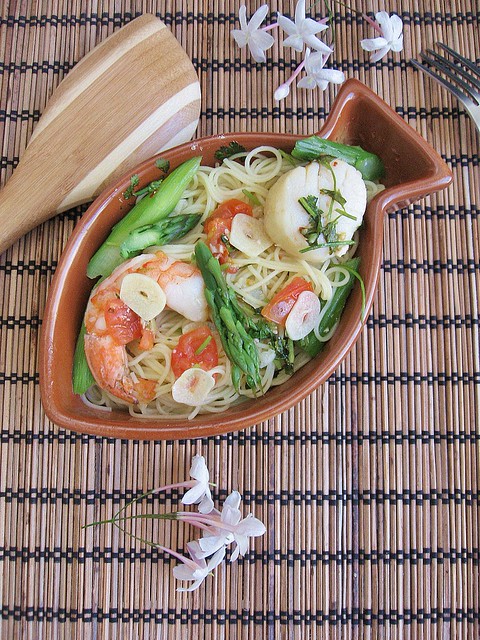
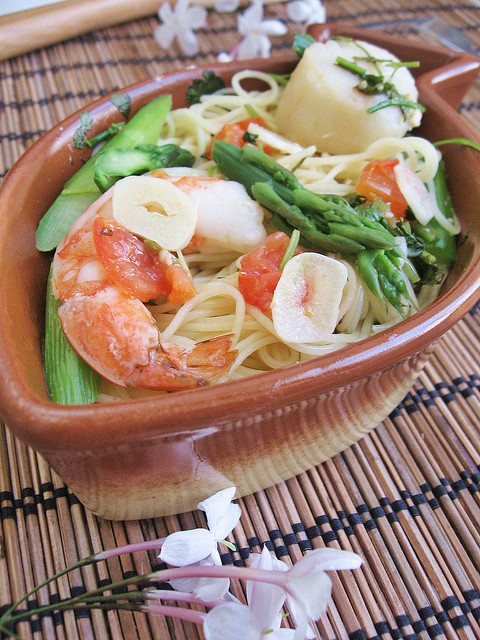
Scallops, Shrimps, Kale Noodles 海鲜 (虾,带子)面

It might be hard for you to imagine how tasty this noodle dish is as you cannot smell and taste the deep seafood flavors, just by looking at this plate. Trust me, as it is absolutely delicious and scrumptious. Simply think Singapore-style Fried Hokkien Noodles, Prawn Noodles or Penang Prawn Noodle Soup; in order to make the passable grade - all MUST be cooked and simmered in prawn stock.

Freshly made prawn stock is just one criteria. Sometimes, pork ribs and other ingredients are also added to the stock especially in the soup version to make it tastier with layered depths of flavors.


As I did not have enough shrimp heads leftovers to make a deeply-flavored seafood stock, I borrowed the umami essence from another formidable seafood ingredient - scallops. The result is amazing as  the noodles is simmered in the shrimps-scallop essence.


Pan-Seared Scallops & Steamed Asparagus - 香煎鲜贝蒸芦笋

While cooking brings out nutrients in some vegetables (e.g. tomatoes, asparagus, carrots), some other vegetables (e.g. onions, bell peppers) are more beneficial when consumed raw. It was suggested here that if you are eating two pounds of vegetables in a single day, aim for one pound cooked and one pound raw - in other words, half-half ratio of cooked vs raw in your total vegetable consumption.

In the Chinese diet, however, we do not regularly consume a wide variety of raw vegetables. Salads such as Arugula, Radish, Grapefruit Salad and Arugula Apricot Salad are not part of our daily routine. Most of our vegetables need to be cooked, or minimally cooked the least e.g. Broccoli, Mushrooms, Tomato Salad, Shungiku (Edible Chrysanthemum Leaves) Salad. The most common raw food in the Chinese diet is probably Cucumber Pickles.

Even in Korean cuisine, you find a plethora of ways how raw vegetables are incorporated in their meals, for example, in banchan (small appetizer-side dishes that usually go along with main entrees).


Any more examples of Chinese salads/raw vegetables side-dishes?


Asparagus is one vegetable that is better cooked than raw. Cooked asparagus particularly steamed ones, makes it easier for our bodies to benefit from asparagus's protective antioxidants. (Source: BBC Good Food).

The advantage of cooking this dish in a skillet is just so that after pan-searing of scallops, the pan can be de-glazed then the thinly sliced asparagus can be steamed in the remaining scallop essence (aroma) while absorbing scallop flavors.


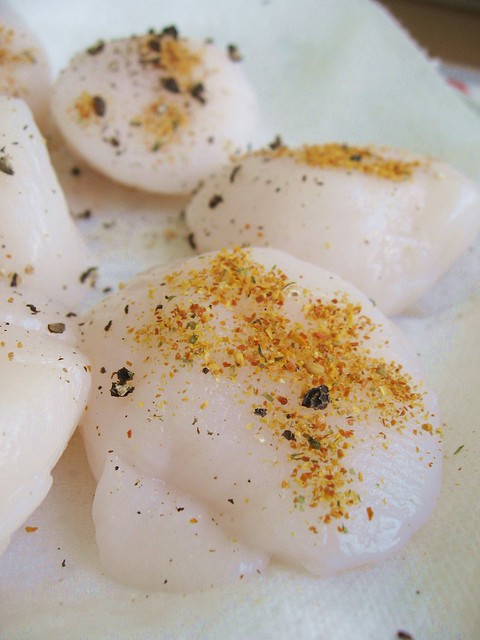
Seven-Spice Seasoned Scallops

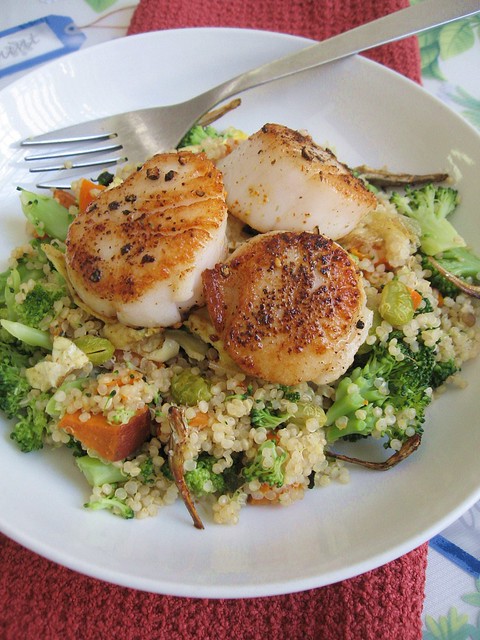
Pan-seared scallops might be the only way to get that golden crust and sear on those scallops. Baking does not work that well, really, in my opinion.


If you are looking for more spice and complexity than the usual salt and black pepper pan-seared scallops, you can look into Japanese 7-spice - Shichimi Togarashi as the alternative.


The spice is not overpowering and the citrus notes (orange peel) in the spice elevates and complements the uber-umami savory-sweet in the scallops.


Dried Scallops, Conpoy 干贝

Conpoy 干贝 or Dried Scallops: Its deep, rich and umami flavor due to its high content of amino acids such as glycine, alanine, and glutamic acid*.


It is also rich in amino acid byproducts such as taurine; and minerals, such as calcium and zinc.

Conpoy is produced by cooking raw scallops and then drying them. In Chinese cooking, conpoy or dried scallops is often used as a natural flavor enhancer. They come handy when flavoring up soups, stir-fries, stews...almost everything savory.


Before using, re-hydrate in warm water till they softened.

*Do you know? Monosodium glutamate, also known as sodium glutamate or MSG, is the sodium salt of glutamic acid. The glutamate of MSG confers the same umami taste as glutamate from naturally occurring ingredients/foods such as dried scallops, featured here (Source: Wikipedia)


Tag: ,


An Escape to Food on Facebook


Asparagus & Seafood Pasta Aglio e Olio

I started stuffing myself silly with brussel sprouts during Fall; then kale and collard greens during Winter. It must be too easy to expect that I will continue to stuff myself silly with Asparagus during Spring. Spring analogous to Asparagus in vegetable language.


Not only obvious, almost a no-brainer how I will cook my asparagus. In stir-frys or steamed, they shall be. And since I was able to adapt this Oven-Baked Shrimps rather easily for Aglio e Olio - here comes Scallops and Shrimps Angel Hair Aglio e Olio with Asparagus!


Celtuce, Seared Scallops, Fried Shallots with Pasta

Scallops for its umami and savory deliciousness. Fried caramelized shallots for its charred fragrance. Celtuce or Stem Letture for its crunch, natural vegetable-sweet and subtle bitter aftertaste.

Three ingredients, a few critical steps, then basically the assembling. And are we in for Celtuce and Pasta in Fried Shallots and Pan-Seared Scallops.

No celtuce? Don't know what is celtuce*? This will work well with broccoli (and its stems too).


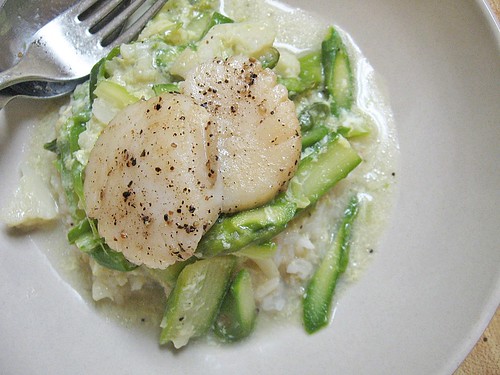
Spring "Risotto" of Asparagus and Scallops

Somehow, I tend to draw risotto's close resemblance to Asian version (Cantonese) "wet rice", known as 烩饭; (pronounced Hui Fan). "Wet rice" as name suggests: this dish is typically served WET. Not your usual fried rice definitely. There is some lazy origins to this. Well, lazy people prefer to eat everything on ONE plate. So, a seafood or meat side-dish (with gravy) is topped over the steamed rice, then serve as ONE-DISH. The outcome: the rice becomes wet, bathed and soaked in side-dish gravy. A way and "culture" of eating (lazy), becomes a dish that can be "marketed" and sold to the masses. It is definitely not a new idea if you think of scallop risotto a la Italia. But we all know that risotto is not solely defined by the "wetness" - it is also uniquely characterized by the cream and cheese as highlighted in Christine Recipes.


Fried Rice and "Wet Rice" must be calling for fussy opposing palates. If you define perfect Fried Rice as: the rice still stay as individual glossy grains after being fried, that cannot be soggy yet must be sufficiently moist (not totally dry that it chokes you at the throat); what defines "Wet Rice"? Every grain that "glues" and where its signature stamps "soggy"? ...


Pan-Seared Scallops with Noodles

You pan seared the scallops on a flat pan. You set the scallops aside. The used pan is "perfumed" with a trail of scallop flavor. Next, you eat the scallops. Then, wash the pan. Wait!?!? Wash the pan??!?!? How can you do that? Detergent and leftover (stains and drops) scallop "juice" don't mix. But some water and cooked noodles may do the magic trick.

I may sound complicated and even shady but I am not. What I am detailing to you below - is to utilize the scallops to the max. OPTIMIZATION. NO WASTAGE...even to the last drop of scallop "juice" that maintains its seafood "unami" till the end. You will know what I mean. The "sticky" remains in the pan after searing the scallops. What can you do with it? And so what is the recipe?

Pan-Seared Scallops with Simmered Noodles
Ingredients: Scallops, lightly dab with kitchen paper towels, then season with salt and black pepper on both side; Noodles, cooked and set aside (note: use somen noodles for its soft noodle texture and quick-cook characteristics); some water

Directions: Add some cooking oil to the pan and when heated, add the scallops and cook each side for 2-3 minutes, till scallops turns from slightly opaque to white (note: do not overcook the scallops). Set scallops aside. After pan-searing the scallops, you will see some leftover scallop "juice" left in the pan. Add some water to dilute the juice, also "scraping" some charred scallop remains sticking on the pan into the "milky mixture". When simmering, add in the noodles (note: you can also add some blanched Chinese vegetables into the simmering noodles) and mix the noodles with the "sauce". You will notice the noodle mixture thickening in the "sauce" and that is normal. Gently simmer the noodles till all the scallops "sauce" is absorbed and voila, your pan is clean! Scoop out the noodles into serving bowls and top the noodles with scallops.

Scallops contain minerals (phosphorous, magnesium), vitamins(vitamin B12 - an important nutrient for cardiovascular health) and essential fatty acids (omega 3 fatty acids that prevent the formation of blood clots). So...here...absolutely easy and delicious scallop noodles for Presto Pasta Nights hosted by the original creator this week, Ruth of Once Upon a Feast. For scallop lovers, this is for you. ^0^

Tag: ,


Stir Fry Scallops with Asparagus and Ginkgo

Today is the 2nd day of Chinese New Year. How has it been goin' for you ?


During Chinese New Year, restaurants usually name their dishes to mark the festive season, and to symbolize good luck, prosperity and peace. For example,

八宝盒 -Eight Treasures - usually assortment of seafood and vegetables in a beancurd pocket
金玉满堂 -Gold Everywhere - usually some egg-fried rice dish with shrimp, and crabmeat
年年高升 -typically a festive goodie "nian gao" 年糕 , meaning "Promotion every year"
富贵有余 -a fish dish; 鱼 and 余 both pronounced "yu" ; with the latter meaning "abundance/excess"
一 路发财 -a dish that often contains black moss vegetable/发菜; 菜 and 财 pronounced "cai" and latter means "money or rich"

代代平安 (Peace and Harmony for Generations) is what I will name a dish, with scallops (带子) in it! For recipe, do check it out here. This is a nice change if you have been feasting excessively and wish for something lighter on the stomach.

Tag: , ,


Steamed clams, steamed scallops - I love steamed seafood!


Enjoyed these steamed scallops and clams, at the same place (Jia Duo Li Eatery, Jordan District, Hong Kong) we had Typhoon Shelter Crab.

Big fat scallops on the shell...

These clams were cooked the same way as the scallops. At least, the seasonings/marinade, garnishes and cooking method were similar. Steamed with glass noodles in a soy sauce base then garnished with red chili and scallions.


Smart, isn't it? The glass noodles absorbs the "clam + sauce" essence very well. Nothing comes to waste!

Check out my Steamed Prawns with Egg Whites if you are on a steaming trail.

Tag: , , ,


Festive dishes for Chinese New Year

Waving bye bye to the Pig and greeting a big hello to the Rat. 7th Feb 2008 marks the first day in the Chinese Lunar Calender - first day of Chinese New Year. Oh well, Mickey Mouse gets extremely popular as a Chinese New Year "mascot" this year (you see a lot of Mickey Mouse red packets/ang pows this year, don't you?) because it is the year of the Rat (Earth Rat, to be more specific) based on the Chinese Animal Zodiac of 12 animals. But one is a mouse and the other is a rat??? I don't know. Similar enough, maybe? Haha... Rat usually starts the cycle, and ends with the Pig. What zodiac animal are you ? :P Now...FOOoo..ooD- we can't go without that when celebrating Chinese New Year. The official "feasting" typically starts on the last day of the old year (Chinese New Year Eve) and families usually have one or two (sometimes even more) signature dishes (must-have) on the dinner table during the eve of Chinese New Year (a.k.a Reunion Dinner). Festive dishes that symbolize good luck, prosperity, abundance and peace. Fish -typically steamed, is one of them. The significance of eating fish relates quite traditionally to a Chinese saying 年年有鱼 (pronounced nian nian you yu) symbolizing 年年有余 (also pronounced nian nian you yu) , whereby the last character 鱼 (pronounced yu, literally meaning - fish) and the character 余 sound exactly alike - pronounced as yu but meaning in abundance. Sometimes, families will even have the fish unfinished(that's on purpose, with intent!) on the plate so that it really symbolizes leftovers and in abundance (of all the good things). Confused? Still confused? Just convince yourself that eating fish is considered auspicious in the New Year. Lucky food. Here's wishing you good abundance of good wishes, good luck, good tidings, good health, good everything for the following years :) In recent years, for the "cooks" at home to go easy, many families gradually turn to steamboat/hotpot for help. It's easy because you just need to get ready the ingredients and everyone in the family will gather round the table and enjoy dinner as one big complete family - meaning togetherness and unity. Families also have reunion dinner dine-outs more often than before. Well, they just want to spare an exhausting day for the "cooks" at home. Hmmm...somebody's got to do all the cooking at home and if it's cooking for the Chinese New Year, it's just gonna be TIRING. And this is the time, when you head over to restaurants, you see restaurants run mad shifts like the factory floor. Sometimes 5-7pm (one round), 7-9pm(another round)...is there something from 9-11pm (that makes it three rounds) ? I don't know but I believe there is. Restaurants even run noon shifts to cater for lunch crowd and lunch reunion. Any breakfast reunions ? :P Also is the time to see restaurants get creative and festive in their Chinese New Year dishes. For example, you will see and read Chinese names in dishes such as: 八宝盒 -Eight Treasures - usually assortment of seafood and vegetables in a beancurd 风舞九天,大展鸿图 -Phoenix Dance - usually braised sharks fin with crab roe 金玉满堂 -Gold Everywhere - usually some egg-fried rice dish with shrimp, and crabmeat 年年高升 -typically a festive goodie nian gao 年糕 , meaning "Promotion every year" 富贵有余 -a fish dish; 鱼 and 余 both pronounced yu ; with the latter meaning "abundance/ excess" 一 路发财 - a dish that often contains black moss vegetable/发菜; 菜 and 财 pronounced cai and latter means "money or rich" Even with a dish like this - Stir fry asparagus with scallops and ginkgo - can only be made good if you name it 代代平安 -Peace and Harmony for Generations as scallops -带子 --> 代 and 带 are pronounced the same, as dai. There are also plenty of Chinese New Year snacks and goodies cookies that you can enjoy. My favorite is Bak Kwa -Dried Meat. There is also another CNY goodie (cake) - Kuih lapis (layer cake) that is popular. This is a rich kuih consisting of thin alternating layers made of butter, eggs and sugar, piled on top of each other. Each layer is laid down and baked separately, making the creation of a kueh lapis an extremely laborious and time-consuming process. There are so many Chinese New Year traditions - some which are decades generations long (passed down from ancestors) and some that evolved purely due to convenience and modern age. Share some of your must-do Chinese New Year practices or must-eat Chinese New Year food, with me.