Showing posts with label grain bowl (plant-based). Show all posts

Black Bean Patty Vegetarian Protein Bowl

This vegetarian plant-based protein bowl is made with store-bought black beans patty, paired with vegetables - broccoli, Brussel sprouts, spinach, carrots and cooked barley.


With more time on hand, you can always make your own bean patty/cake e.g. Black Bean Potato Patty/Cake


Garbanzo Beans Chickpeas with Vegetables

Happy 2026 and we hope your 2026 has been off to a great start!

The new year starts off with this healthy nutritious vegetarian/meatless bowl meal nicely balanced with a variety of cooked vegetables, roasted chickpeas/garbanzo beans, and black rice.


"Oven-Fried" Meatless "Ground/Mince Meat"

This oven-"fried" meatless mince is like "meat-sauce" without the sauce, without the meat. Besides making Vegetarian Mapo Tofu, this meatless mince versatility can easily be extended to make such balanced meatless meals.


A batch of oven-"fried" mince is "blank canvas" for other stir-fries too; or tossed with pasta (above) or mixed in with quinoa (below), then served with vegetables as a complete meal.

You can always make your own vegetarian meatless mince (Vegetarian Simmered "Meat" Sauce) from scratch with diced mushrooms and tofu. It is definitely healthier and taste more naturally delicious than store-bought plant-based mince which wins on convenience but end of the day, still partially processed.


Tempeh Vegetables Veggies Salad Bowl

Make it meatless, make it tempeh.

Not only is tempeh a great source of plant-based protein, this block of fermented soybeans means a jolt of good bacteria while feasting on homemade veggie salad protein bowl meals e.g. Tempeh, Broccoli, Avocado, Kiwi Salad Bowl.


In addition, the mixed grains (of rice, barley and millet) included in Trader Joes 3-grain tempeh is a bonus - which means, more fiber, and more nutrients.

For meatless/vegetarian/plant-based protein bowls, you can also use regular tofu - tofu typically used in Chinese stir-fries such as Napa Cabbage, Bok Choy, Mushrooms and TofuPineapple Bell Peppers TofuSweet and Sour Tofu ).


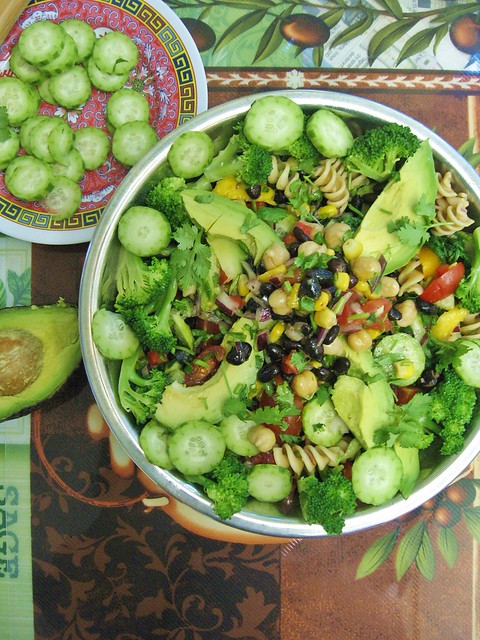
Beans, Corn, Mango, Tomato Salad

It is one of those hot-hotter-hottest days in summer when "one-dish-has-everything" salad comes to mind. Vegetables and beans (legumes) all in one. Protein, fiber and carbs well-taken care of.


Moreover, no one wants to spend long hours behind the stove (heat!) in the hot summer days, so this minimal-cooking salad-as-a-meal (e.g. Falafel Salad Bowl, Tempeh Salad Bowl, Tandoori Chicken Salad) is a savior. You can also try this Vegetable and Tofu Platter with Cheese Dip.


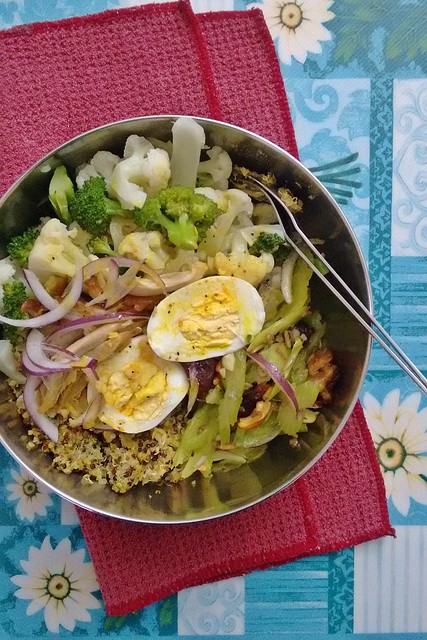
Broccoli, Cauliflower, Celery Quinoa Bowl

Celery for fiber boost, dates for additional potassium (especially after a sweaty workout) and nuts for protein (plus good fats) - this Celery, Dates, and Nuts salad turned out a perfect component to a post-workout lunch salad bowl composed of steamed broccoli and cauliflower, leftover shredded chicken, hard-boiled egg, and quinoa.


For vegetarians, omit the chicken as the celery, dates and nuts component is delightfully tasty to glorify this steamed vegetables and quinoa grain bowl.


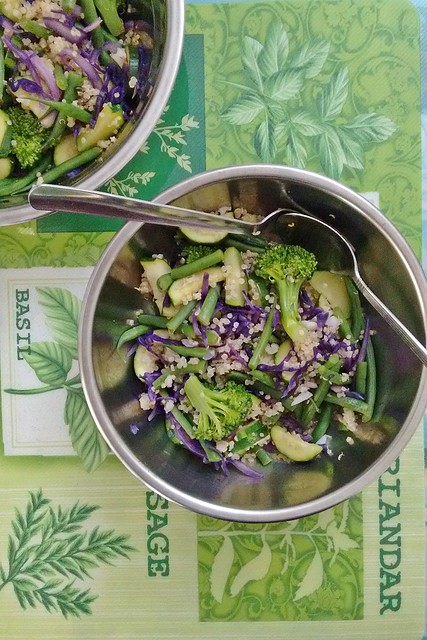
Broccoli, Zucchini, Cabbage Quinoa Salad

Protein and fiber packed, quinoa is a super versatile whole grain with endless possibilities -  healthy fried "rice", exotic "rice" pilaf, creative sushi, comforting porridge/congee, savory snack-size patties, colorful salads, and wholesome plate meals or bowl meals.

With broccoli, zucchini, green beans and red cabbage, you can easily turn this light vegetarian salad to quick supper. Alternatively, if you are making a seafood entree like this Seafood in a Bag, this salad will be your perfect side-accompaniment.


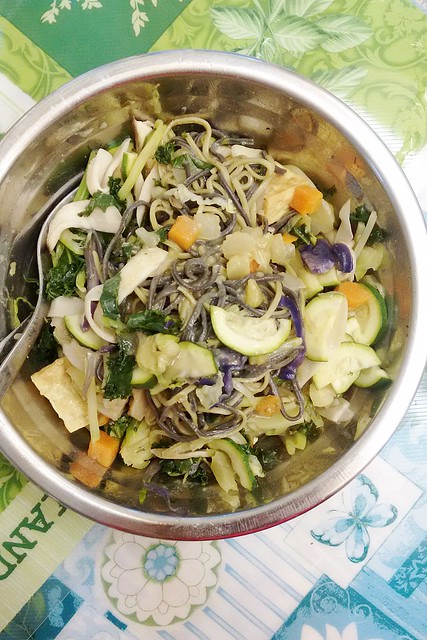
Bean Pasta with Vegetarian Tofu Curry

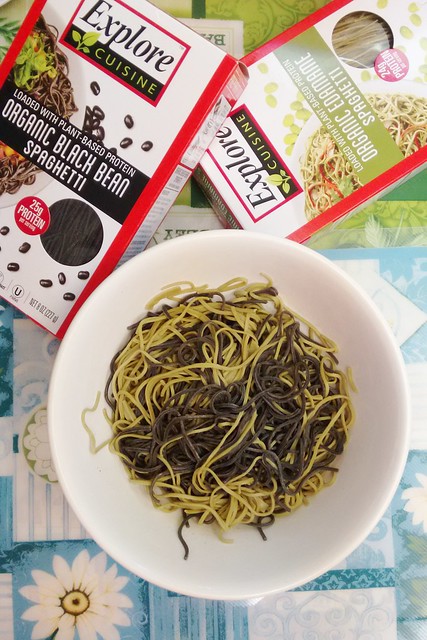
Explore Cuisine bean-powered pasta is not only great in taste and texture; it also provides a good amount of protein and fiber per serving. Their Organic Edamame Spaghetti and Organic Black Bean Spaghetti contain 24 g of protein per 2 oz serving - almost three times more than regular pasta and twice that of chickpea or lentil.


To enjoy the best of both worlds, I used two different spaghetti - Edamame Spaghetti and Black Bean Spaghetti, to create this dish - Edamame and Black Bean Spaghetti with Steamed Vegetables in Vegetarian Tofu Green Curry


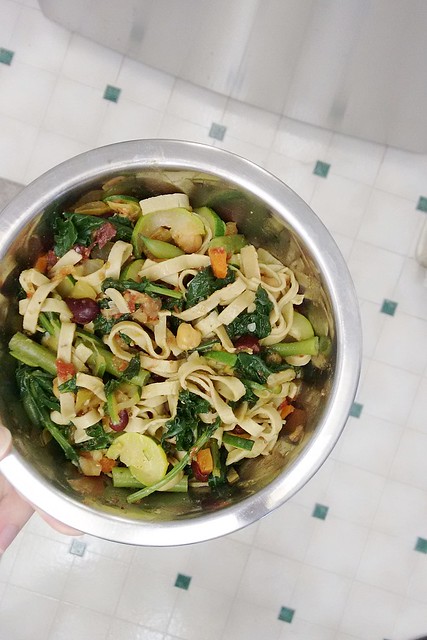
Gluten-Free Bean Pasta with Veggies Kale, Zucchini, Green Beans

Beans on beans, pulses or more pulses. What do you say? Plant-protein power! Made from organic edamame and mung bean, Explore Cuisine's gluten-free fettuccine* carries the leftover bean "sauce" very well and makes a nice warm veggie pasta lunch on a cool breezy day. Alternatively, make a quick chickpea salad, toss it with pasta and save this pasta salad or Edamame and Mung Bean Fettuccine Veggie Salad Bowl for the hot summer days.


This bean fettuccine* on its own tastes very flavorful, warm or at room temperature (cooked and allowed to cool a few minutes). Personally, I enjoy the natural bean flavor of this pasta as it shines through without any sauce, just like this Edamame and Mung Bean Fettuccine Veggie Salad Bowl.


Tempeh, Broccoli, Cabbage, Avocado & Kiwi Salad 印尼豆豉蔬菜主食沙拉

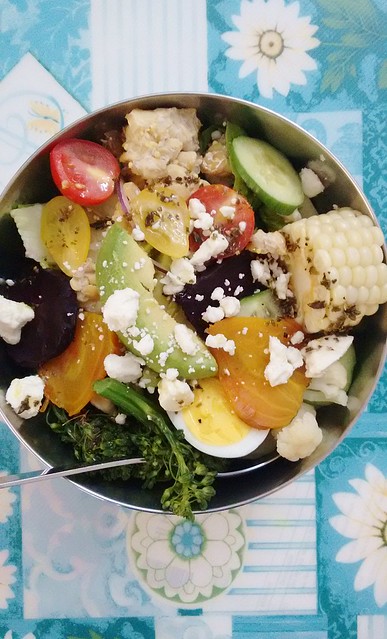
With salad and grain bowls incorporated into our family meals, there are endless possibilities to switch up the vegetables, grains and proteins.

For choice of meat proteins in our family, it is usually (almost surely) chicken e.g. Steamed Vegetables with Quinoa and Rotisserie Chicken Bowl , Asparagus and Cauliflower with Quinoa and Chicken; and for seafood-based protein, it can be either fish or shrimps e.g. Avocado, Radish, Mixed Veggies and Shrimp Bowl. Other times, it might be as basic as - one egg, like in this Mixed Veggies, Mushrooms and Egg Salad.


Of course, there are also meatless protein options e.g. tofu, tempeh. As my homemade protocol, a meal-salad bowl is made up (at least 50% of the bowl) with mostly vegetables - salad greens always on the bottom, then built up with hardier vegetables (can be steamed or raw) such as broccoli, cauliflower, green beans, green cabbage, red cabbage, zucchini and red onions. Based on the seasons, I also like to add fruits e.g. nectarines and berries during summer, apples during the autumn months; kiwi and oranges in winter.


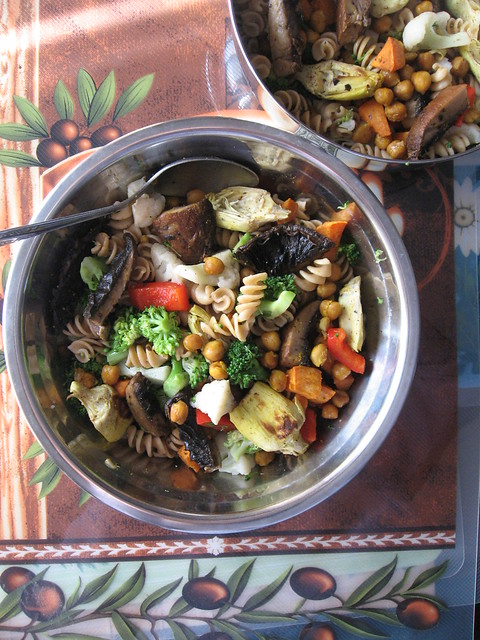
Roasted Artichoke, Mushrooms, Chickpeas Pasta

A simple one-bowl salad of everything, combines two cooking techniques in vegetables preparation -via roasting and steaming. The cauliflower and broccoli could have jolly well been roasted to charred-smoky deliciousness; but personally, I prefer my fresh cruciferous vegetables - steamed e.g. Steamed Purple Cauliflower, or stir-fried e.g. Stir-Fried Broccoli with Beech Mushrooms. Steaming, in this case, retains maximum nutrients using shorter time (10 mins or less), and lower cooking temperature 100degC steam-temperature.


Easy Bibimbap, Mixed Vegetables Rice 韩式拌饭

Do you agree that Bibimbap is considered easy to prepare?

I cater to my own convenience(s) when I cook, so this might not be very authentic Korean bibimbap. However if you are looking for a fuss-free, quick and easy way to NUTRITIOUSLY and HEALTHILY satisfy lunch or dinner, then such a home-style bibimbap fits the bill.

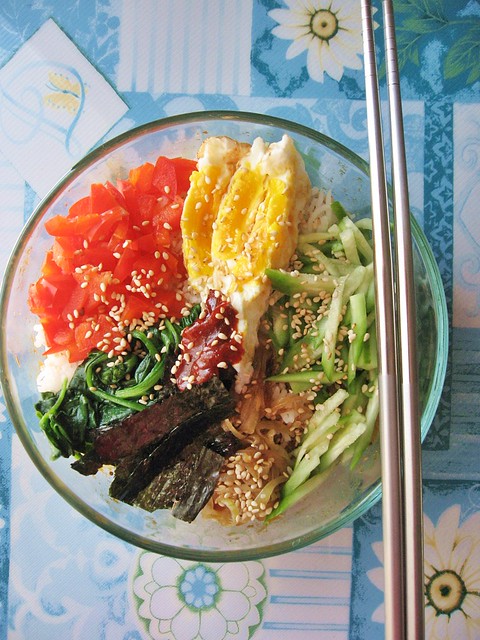
Clockwise from left: Organic bell pepper, fried egg, cucumber, sauteed onions, Nori seaweed, garlic spinach

The recipe for Easy Healthy Bibimbap first appeared here. The ingredients on top of the rice can be switched up, played down but one ingredient that remains true will remain true - Korean hot pepper paste Gochujang.

This is also a good opportunity to take on the creative role and give it your own spin. Whichever vegetables (or proteins), try to include as many different colors as you can, typically five colors. Why five? Read more here.

GREEN (baby spinach, cucumbers, or any salad greens, even kale or Bok Choy); RED (bell pepper), YELLOW (egg); BLACK (seaweed, mushrooms); WHITE (onions, tofu, radish). Note: typically soy bean sprouts or bean sprouts represent "White" but I did not have them available.

It might be hard to believe but strangely this combination translates to a balance and harmony of flavors.


Easy Healthy Korean Bibimbap 韩式拌饭

I found you at last! Without much procrastination, I have to "own" you especially when I do not go to the Korean grocery store that often. A few days after, you are already put to good use.

I have thought about making bibimbap at home for some time. Something is just lacking and you are critical.
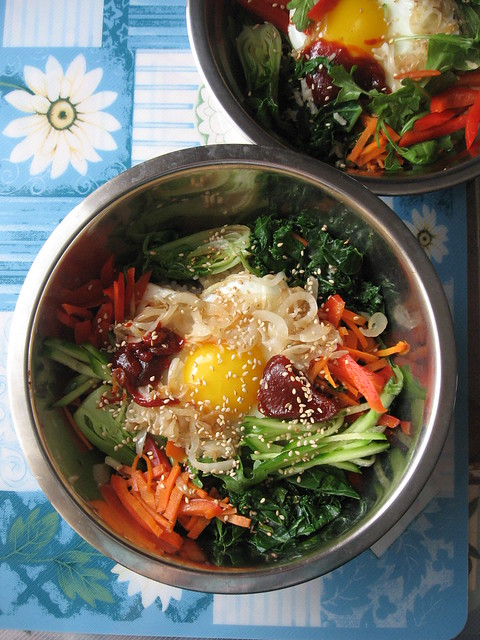

The Korean national dish - bibimbap, can be considered very nutritious, healthy and wholesome. Traditional bibimbap hails five colors - green 青, red 赤, yellow 黄, white 白, black 黑 (of vegetables) closely associated to the body's Yin-Yang five-elements balance. Five elements' Wu-Xing 五行: Wood 木, fire , earth , metal , and water associated with five-systems' Zang-Fu 五脏: Liver 肝, Heart 心, Spleen 脾, Lungs 肺, Kidney ).

In line with tradition, modern-day eating also calls for a variety of colorful fresh vegetables (rainbow diet), and bibimbap precisely hits the spot.
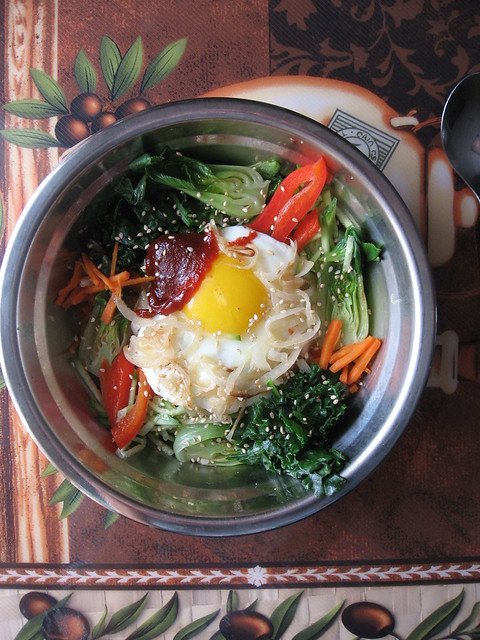

Similar to making sushi at home, the good thing about making bibimbap at home is to be able to put your own creative varied spin on it. Today I have deviated from tradition a little by NOT using spinach. But with tradition, I have tried to get in as many colors as possible, and using a variety of vegetables. Another bonus of making bibimbap at home is - it actually allows you to use up your "odd-quantity" leftover produce (not recommended but if you want, you can).

So what's in my bibimbap?